Customized Dementia Care: The Advantages of Little Senior Care Residences
Business Name: BeeHive Homes of Farmington
Address: 400 N Locke Ave, Farmington, NM 87401
Phone: (505) 591-7900
BeeHive Homes of Farmington
Beehive Homes of Farmington assisted living care is ideal for those who value their independence but require help with some of the activities of daily living. Residents enjoy 24-hour support, private bedrooms with baths, medication monitoring, home-cooked meals, housekeeping and laundry services, social activities and outings, and daily physical and mental exercise opportunities. Beehive Homes memory care services accommodates the growing number of seniors affected by memory loss and dementia. Beehive Homes offers respite (short-term) care for your loved one should the need arise. Whether help is needed after a surgery or illness, for vacation coverage, or just a break from the routine, respite care provides you peace of mind for any length of stay.
400 N Locke Ave, Farmington, NM 87401
Business Hours
Families usually begin exploring dementia care when something specific shakes their confidence: a roaming event at night, a stove left on, a sudden hospitalization, or a caretaker spouse finally confessing, "I can not keep doing this alone." By the time people look beyond home care, they are tired, stressed, and overwhelmed by terms like assisted living, memory care, respite care, and knowledgeable nursing.
In that swirl of alternatives, small senior care homes can be simple to miss. They pass numerous names: residential care homes, board and care, adult household homes, group homes. Whatever the label, the design is simple. Rather of a large facility with lots or hundreds of locals, you have a regular home in an area with perhaps 4 to 10 citizens and a little staff.
For lots of people coping with dementia, those smaller sized settings match the way their brains now process the world: slower, more relational, more dependent on familiar rhythms than on complex schedules or big spaces. When succeeded, small homes can provide extremely customized dementia care in a setting that feels less like a center and more like extended family.
What little senior care homes in fact are
From the outdoors, a residential care home often looks like any other single household home on the block. Inside, it is accredited by the state to supply senior care, typically at an assisted living level. That generally consists of aid with activities such as bathing, dressing, grooming, medications, and meals.
Regulations vary by state, however crucial characteristics tend to consist of:
- A limited variety of locals, usually in between 4 and 10.
- Staff present around the clock, frequently with awake over night caregivers.
- Private or semi-private bed rooms, shared common locations, and home-style kitchens.
- A focus on day-to-day living instead of a heavy medical design, unless the home is accredited more like a nursing facility.
Many residential care homes specialize even more in memory care. That might imply staff with extra dementia training, more protected environments to prevent risky roaming, and programming adjusted to cognitive limitations.
From a licensing perspective, these homes often fall under the same umbrella as assisted living, however households experience them really in a different way. Instead of a lobby, long corridors, and a large dining-room, you find a front door, a living room, and a kitchen table.
Why dementia care is different from basic senior care
Good senior care supports physical security and day-to-day functioning. Good dementia care needs to go even more. It needs to develop surroundings, regimens, and relationships that reduce stress and anxiety, support kept abilities, and maintain dignity in the face of progressive cognitive loss.
Dementia modifications how an individual analyzes sound, space, time, and social cues. What feels mildly irritating to a cognitively healthy older grownup can feel overwhelming to someone with memory loss or impaired judgment. A crowded lobby, echoing hallways, or a new employee each week can intensify confusion and agitation.
Three realities regularly shape dementia care:
First, individuals with dementia frequently lose short-term memory long before long-term memory. That means they may not keep in mind lunch, however they still acknowledge a long-loved hymn, the odor of cinnamon, or the method their partner utilized to fold towels.
Second, they end up being more conscious their environment. Abrupt sounds, cluttered rooms, or complex instructions can set off distress or withdrawal.
Third, they rely greatly on caregivers to analyze their habits. A resident who "refuses to shower" may in fact be scared by a severe spray, not able to understand guidelines, or simply cooled by the restroom. Caregivers who know the person's history and patterns can often reveal the real barrier and solve it without confrontation.
All of this tends to prefer settings where personnel can actually be familiar with each resident and where the physical environment is predictable and calm. That is where small senior care homes can shine.
How customization works in a little setting
Personalized dementia care is not a motto on a brochure. It is a series of small, repetitive actions that accumulate over days and months. In a small home, those actions are much easier to perform since the number of individuals and variables is limited.
Consider morning regimens. In big buildings with 80 or more homeowners, personnel frequently deal with tight schedules: 10 or 15 individuals to help up, bathed, dressed, and ready for breakfast within a specified window. Even with caring personnel, there is pressure to move rapidly. That can feel disconcerting for a resident with dementia who needs a slower rate and time to process.
In a home with 6 locals, staff may have a lot more flexibility. One person can sleep in due to the fact that he always loved late early mornings. Another can shower after breakfast, when she feels more steady. Instead of a passage of closed doors, personnel can hear when someone is stirring and adjust in genuine time.
Meals show the exact same contrast. I have strolled into large memory care dining rooms where personnel attempted their finest however had 20 citizens to cue and reroute. Compare that with a house where 2 caregivers prepare breakfast in an open cooking area, know who likes oatmeal thin or thick, and notification early when someone seems less starving than usual.
Personalization is not just about preference. It is also about medical subtlety. In dementia care, early indications of infection or discomfort can be easy to miss because the individual may not determine or express signs plainly. A caretaker who has been serving the same 5 homeowners for months is a lot more most likely to identify a small change in gait, appetite, or sleep patterns.
Familiar, human-scale environments lower distress
The size and layout of a setting deeply affect how an individual with dementia browses the day. Big centers typically offer numerous features: activity rooms, movie theaters, salons, several dining options. Those can be wonderful for some locals, especially in early stages of cognitive decline.
As dementia progresses, nevertheless, less can in fact be more. An individual having problem with memory and orientation generally does much better with:
- Shorter ranges between bedroom, bathroom, and typical areas.
- Clear sightlines, so they can see where to go rather than remember directions.
- Fewer decision points, such as which hallway or elevator to use.
A small senior care home naturally provides this type of human-scale environment. You walk out of your bedroom and within a few steps you can see the living room, the cooking area, and the nearest bathroom. Instead of navigating floors and wings, you browse an easy house.
Noise levels matter too. In a building with 60 residents, even a relatively calm day generates a great deal of sensory input: Televisions, intercoms, cleaning devices, phone calls at the front desk, visitors coming and going. In a home with 6 citizens, the background sound might be dishes in the sink, a radio at low volume, or quiet discussion at the table.
For somebody with dementia, that difference can be the line in between continuous low-level agitation and bearable, foreseeable stimulation.
Relationships: depth rather than scale
The advantage of small homes is not just less individuals. It is the chance for longer, deeper relationships between residents, staff, and families.
In large memory care or assisted living settings, staffing patterns and turnover can make it hard for families to even know who is supplying the majority of the hands-on care. You may acknowledge the nurse or the lead assistant, but the rotating shifts mean your parent interacts with dozens of staff over time.
In a residential care home, the core caregiving group might be less than 10 people overall, consisting of part-time staff. Relative rapidly discover who is on mornings, who deals with nights, who braids hair on Sundays, who loves to sing with citizens. That familiarity builds rely on both directions.
I have actually seen families deeply involved in little homes: bringing in special dishes, showing staff how Dad used to shave with his safety razor, sharing favorite tunes, even assisting staff learn a couple of words of a resident's native language. Those personal information become part of the care strategy, not just side notes.
For the resident with dementia, the pay-off is a stable cast of characters. Deals with repeat, voices are identifiable, and personnel know how to interpret each person's ways of expressing requirements. A resident who frowns and tugs at his collar might be too warm. Another may be interacting pain. In a home with a handful of locals, staff can bring those mental maps and fine-tune them over months and years.
Clinical safety in a non-institutional setting
Families sometimes stress that a small home can not manage intricate dementia care requires securely. The reality is nuanced and depends on good licensing, training, and medical oversight.
Most little homes that focus on memory care deal:
- 24/ 7 staff presence, frequently with awake overnight caregivers.
- Medication administration, either by skilled caregivers or certified nurses, depending on state rules.
- Support with incontinence, mobility, feeding, and bathing.
- Coordination with outside companies such as doctors, home health, hospice, and physical therapy.
For lots of people dealing with dementia, these capabilities are enough for the majority of their illness course. In truth, little homes frequently handle greater acuity on the individual care side than lots of traditional assisted living communities, which often have staffing ratios that make really hands-on care difficult.
The question is not whether a little home is "medical enough," but how it gets in touch with medical companies. Some of the best setups I have actually seen include:
- A visiting nurse professional who rounds frequently, examines medications, and tracks persistent conditions.
- Established relationships with particular home health and hospice agencies.
- Clear procedures for falls, behavioral modifications, and indications of infection.
- Direct phone access for households to talk with the owner or care coordinator.
There are edge cases. Someone on a ventilator, with unsteady feeding tubes, or with complex wound care generally needs a proficient nursing center. The same goes for citizens with very unpredictable hostility that endangers security in a little environment. Excellent operators acknowledge those limits early and assist families prepare shifts when needed.
Comparing large neighborhoods with little homes
Both traditional memory care neighborhoods and little residential care homes have a location in dementia care. The best choice depends on the person's phase of disease, personality, and household situation.
Here is a short, streamlined comparison that households frequently discover helpful:
-
Environment. Big communities use more amenities and activity spaces, however they can feel hectic, with long corridors and more shifts. Little homes feel familiar and compact, with fewer "moving parts" to navigate.
-
Social life. Larger settings can supply group activities, clubs, and more comprehensive social circles, particularly handy for people in earlier phases who take pleasure in range. Small homes typically foster quieter, more intimate interactions and might be much better matched to individuals who were never "group activity" people.
-
Staffing patterns. In big communities, there may be on-site nurses and more layers of management, but direct caregivers typically cover bigger ratios. In small homes, ratios are generally lower, and the same personnel communicate with the exact same citizens daily, though there may be less medical staff on site.
-
Flexibility. Big organizations often have stringent schedules for meals, bathing, and activities to collaborate many citizens. Little homes can often adapt regimens to private sleep patterns, preferences, and state of minds, especially handy for people with dementia who do finest when the day bends to their internal rhythms.
-
Cost and transparency. Costs vary extensively. Some big communities charge lower base rates but add substantial fees as care requirements increase. Numerous little homes use more inclusive rates or easier tiered models. Due to the fact that the setting is smaller, families typically feel they can see more clearly what they are paying for.
Neither design is inherently better. The fit depends upon the person. I have actually seen extroverted former instructors flourish in large memory care programs filled with conversation and structured activities. I have also seen introverted engineers unwind noticeably once moved from a huge building to a quiet home with one television and a garden.
Where respite care fits in
Family caregivers in some cases feel that choosing a long-lasting senior care alternative is all-or-nothing. In truth, respite care stays can be a crucial bridge, particularly when you are checking out small homes.
Respite care is short-term, typically from a couple of days up to a month or more. Some little senior care homes keep one space offered for respite. Others convert an open irreversible bed into a respite chance in between long-term residents.
Short stays can assist in a number of ways:
They provide the individual with dementia a chance to attempt a new environment without the psychological weight of "this is forever." Families typically discover that the transition goes better than expected in a little, home-like setting.
They supply much-needed rest for spouses or adult kids who are nearing burnout but not prepared to dedicate to permanent placement.
They use a real-world test. You see how staff manage nighttime roaming, individual care, and communication. You can observe meals, health, and mood modifications across several days rather than a single tour.
If you are seriously thinking about a small home for long-term dementia care, inquiring about respite alternatives is smart, even if you do not use them best away.
Trade-offs and limitations of little senior care homes
No setting is best. Little homes come with authentic compromises that deserve clear-eyed discussion.
One restriction is staffing depth. In a house with 6 homeowners, if one caregiver calls out sick, there is less redundancy than in a 100-bed center. Good operators prepare for this with backup staff and on-call systems, but families ought to still ask specific concerns about coverage.
Another is features. If your loved one really takes pleasure in organized activities, on-site treatment gyms, or a buzzing social environment, a small home might feel too quiet. Some homes generate going to musicians, family pet therapy, or exercise instructors, but the scale is smaller.
Regulation and oversight vary by state. While most jurisdictions certify residential care homes, the intensity of evaluations and reporting can vary from what you see in larger senior care settings. This makes it specifically crucial to visit often, view carefully, and trust your observations.
Lastly, place can be a compromise. Lots of small homes remain in residential neighborhoods that might be farther from major health centers or from where family members live. For some families, frequent checking out outweighs other aspects, leading them toward bigger facilities more detailed to home.
Good decision-making suggests weighing these realities against the advantages of customization, environment, and relationship-based care.
What to search for when touring a small dementia care home
Choosing any senior care setting is part fact-finding, part gut impulse. With little homes, the "feel" of the place is particularly significant, due to the fact that the environment is intimate and your loved one will be sharing a living room and cooking area with a handful of people.
Here is a succinct checklist numerous households find practical when visiting little homes:
- Listen and smell at the front door. A faint odor of lunch is normal. Strong smells of urine, bleach, or heavy air freshener are cautioning signs.
- Watch staff-resident interactions for a minimum of 20 minutes. Do people speak respectfully, utilize citizens' names, and make eye contact, or do they discuss them?
- Ask specific concerns about dementia training. General "we have experience" is insufficient. Search for official training hours, continuous education, and examples of how they manage agitation or sundowning.
- Observe whether residents look groomed, appropriately dressed, and engaged at their own level, whether that means chatting, listening to music, or merely sitting comfortably.
- Clarify medical and behavioral boundaries. Ask clearly what kinds of needs would activate a recommendation to relocate to a higher level of care, such as severe hostility, regular hospitalizations, or feeding tubes.
Do not rush. Visit at different times if you can, consisting of evenings or weekends. If the home seems perfect on paper but you feel uneasy after two visits, honor that impulse and keep looking.
Supporting dignity and identity through the little things
Dementia gradually strips away obvious markers of independence. Driving, handling cash, cooking, and intricate decision-making fall away. Yet within those losses stays a person with long-lasting practices, choices, and values.
Small senior care homes are uniquely placed to secure that inner identity through little acts that would be tough to sustain at scale. I have seen:
A retired farmer in a residential care home who spent early mornings "examining the fence," which in useful terms suggested strolling the backyard perimeter with a team member. That ten-minute ritual, constructed into his day-to-day routine, soothed his restlessness and honored his sense of responsibility.
A previous choir singer whose caregiver put on old hymn recordings every Sunday morning and invited her to "help lead." Her words were garbled by that point, but the light in her eyes was unmistakable.
A lady who constantly prided herself on hospitality. Staff offered her a role elder care BeeHive Homes of Farmington "setting the table" for meals with brilliantly colored, solid meals. Jobs were adapted for security, however the function was real.
Those moments are not additionals. For somebody living with dementia, they are the core of excellent care. Small homes, with closer staff-resident ratios and less rigid schedules, can weave such routines into every day life more easily than big institutions.
When a bigger setting might be the much better fit
It is necessary to acknowledge that little is not constantly much better. Some people and families will be well served by bigger assisted living or memory care communities.
You might favor a bigger setting if:
Your loved one remains in the earlier phases of dementia, still highly social, and flourishes on structured activities, getaways, and variety. Larger communities frequently use more programs options each day.
The person has considerable medical needs best kept an eye on by on-site nursing or instant access to a wider scientific group, such as regular IV medications or very intricate persistent disease management.
Your household needs or values proximity above all else. If the only small homes are an hour away, but a great memory care neighborhood is 10 minutes from your house, the capability to visit several times a week might outweigh other factors.
You anticipate that your loved one might need a higher level of care soon, and you wish to avoid another relocation. Some larger organizations supply a continuum from assisted living to memory care to competent nursing, which can streamline future transitions.
The decision is rarely clean-cut. Numerous families ultimately choose a little residential care home, then later on transition to a nursing center when dementia is very advanced and medical complexity dominates. That is not a failure. It is an adjustment to changing needs.
Bringing it back to what matters most
Words like assisted living, memory care, respite care, and senior care can make decisions feel abstract, as if you are selecting between service bundles. Below the labels lies a human reality: somebody you enjoy, dealing with a brain illness that is gradually changing who they appear to be on the outside, even as their core self remains.
Small senior care homes will not reverse dementia or eliminate its hardest days. What they can frequently do, when well run, is make every day life more humane:
Fewer strangers at the bedside. More familiar faces in the kitchen.
Less strolling down long hallways questioning where you are. More sitting in a living room where you gradually know every corner.
Fewer rushed showers at scheduled times. More chances to follow your own rhythm.
Behind the policies and organization models, that is what households are actually seeking: a location where their loved one with dementia can still be known as an individual, not a room number. Small senior care homes, with their concentrate on tailored relationships and human-scale living, are one of the most powerful tools we need to make that possible.
BeeHive Homes of Farmington provides assisted living care
BeeHive Homes of Farmington provides memory care services
BeeHive Homes of Farmington provides respite care services
BeeHive Homes of Farmington supports assistance with bathing and grooming
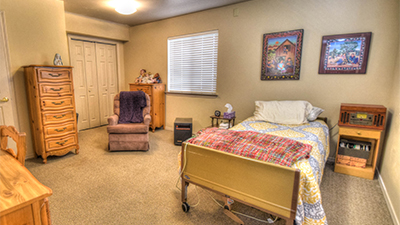
BeeHive Homes of Farmington offers private bedrooms with private bathrooms
BeeHive Homes of Farmington provides medication monitoring and documentation
BeeHive Homes of Farmington serves dietitian-approved meals
BeeHive Homes of Farmington provides housekeeping services
BeeHive Homes of Farmington provides laundry services
BeeHive Homes of Farmington offers community dining and social engagement activities
BeeHive Homes of Farmington features life enrichment activities
BeeHive Homes of Farmington supports personal care assistance during meals and daily routines
BeeHive Homes of Farmington promotes frequent physical and mental exercise opportunities
BeeHive Homes of Farmington provides a home-like residential environment
BeeHive Homes of Farmington creates customized care plans as residents’ needs change
BeeHive Homes of Farmington assesses individual resident care needs
BeeHive Homes of Farmington accepts private pay and long-term care insurance
BeeHive Homes of Farmington assists qualified veterans with Aid and Attendance benefits
BeeHive Homes of Farmington encourages meaningful resident-to-staff relationships
BeeHive Homes of Farmington delivers compassionate, attentive senior care focused on dignity and comfort
BeeHive Homes of Farmington has a phone number of (505) 591-7900
BeeHive Homes of Farmington has an address of 400 N Locke Ave, Farmington, NM 87401
BeeHive Homes of Farmington has a website https://beehivehomes.com/locations/farmington/
BeeHive Homes of Farmington has Google Maps listing https://maps.app.goo.gl/pYJKDtNznRqDSEHc7
BeeHive Homes of Farmington has Facebook page https://www.facebook.com/BeeHiveHomesFarmington
BeeHive Homes of Farmington has an YouTube page https://www.youtube.com/@WelcomeHomeBeeHiveHomes
BeeHive Homes of Farmington won Top Assisted Living Home 2025
BeeHive Homes of Farmington earned Best Customer Service Award 2024
BeeHive Homes of Farmington placed 1st for Senior Living Communities 2025
People Also Ask about BeeHive Homes of Farmington
What is BeeHive Homes of Farmington Living monthly room rate?
The rate depends on the level of care that is needed (see Pricing Guide above). We do a pre-admission evaluation for each resident to determine the level of care needed. The monthly rate is based on this evaluation. There are no hidden costs or fees
Can residents stay in BeeHive Homes until the end of their life?
Usually yes. There are exceptions, such as when there are safety issues with the resident, or they need 24 hour skilled nursing services
Do we have a nurse on staff?
Yes. Our administrator at the Farmington BeeHive is a registered nurse and on-premise 40 hours/week. In addition, we have an on-call nurse for any after-hours needs
What are BeeHive Homes’ visiting hours?
Visiting hours are adjusted to accommodate the families and the resident’s needs… just not too early or too late
Do we have couple’s rooms available?
Yes, each home has rooms designed to accommodate couples. Please ask about the availability of these rooms
Where is BeeHive Homes of Farmington located?
BeeHive Homes of Farmington is conveniently located at 400 N Locke Ave, Farmington, NM 87401. You can easily find directions on Google Maps or call at (505) 591-7900 Monday through Sunday 9:00am to 5:00pm
How can I contact BeeHive Homes of Farmington?
You can contact BeeHive Homes of Farmington by phone at: (505) 591-7900, visit their website at https://beehivehomes.com/locations/farmington/,or connect on social media via Facebook or YouTube
Residents may take a trip to the Three Rivers Eatery & Brewhouse . Three Rivers Eatery & Brewhouse offers a relaxed dining atmosphere suitable for assisted living, senior care, elderly care, and respite care family meals.