What Makes an Excellent Memory Care Home: Activities, Treatments, and Daily Routines
Business Name: BeeHive Homes of Farmington
Address: 400 N Locke Ave, Farmington, NM 87401
Phone: (505) 591-7900
BeeHive Homes of Farmington
Beehive Homes of Farmington assisted living care is ideal for those who value their independence but require help with some of the activities of daily living. Residents enjoy 24-hour support, private bedrooms with baths, medication monitoring, home-cooked meals, housekeeping and laundry services, social activities and outings, and daily physical and mental exercise opportunities. Beehive Homes memory care services accommodates the growing number of seniors affected by memory loss and dementia. Beehive Homes offers respite (short-term) care for your loved one should the need arise. Whether help is needed after a surgery or illness, for vacation coverage, or just a break from the routine, respite care provides you peace of mind for any length of stay.
400 N Locke Ave, Farmington, NM 87401
Business Hours
Families rarely start researching memory care on a peaceful weekend with endless time. Regularly, they are operating on little sleep, balancing work and medical visits, and attempting to keep a loved one safe in a house that no longer fits their requirements. I have strolled plenty of hallways with kids, daughters, and spouses who feel two things simultaneously, grief at the decrease and relief at the possibility of help. The very best memory care homes earn that relief. They develop days that feel familiar and dignified, assistance abilities that remain, lower dangers without removing away freedom, and keep people linked to their own life story.
That does not occur by accident. It comes from an approach of care that is lived out minute by minute, from breakfast routines to bedtime, from how a staff member approaches a resident who is nervous to how the group deals with a bad night. If you are comparing neighborhoods, keep your eye less on the lobby chandelier and more on rhythms, staffing, and how people spend their time.
A care philosophy you can see, not just read
Every pamphlet guarantees individual centered care. In practice, you should have the ability to see it within five minutes of stepping into a memory care home. View the little interactions. Does a caregiver crouch to eye level and utilize the resident's name before using aid, or do they tug a sleeve and hurry the job? Are people pushed to the same activity at the very same time, or do you see variation since requirements and interests differ?
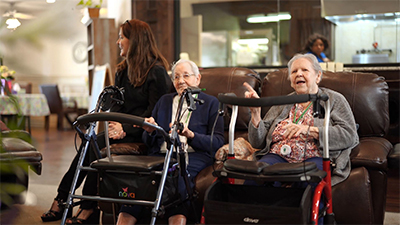
An excellent group assumes that, even with dementia, an individual continues to have preferences, routines, pride, and triggers. For instance, I as soon as dealt with a previous mail provider who became restless around 3 p.m. Because the staff understood his background, they set up a simple postal station with envelopes and bins. Most days he would arrange for twenty minutes, then accept tea and a treat. Without that anchoring task, the very same period ended up being a gauntlet of rejections and exit seeking.
Care that respects the individual reduces distress habits, which in turn lowers the need for antipsychotic medications. You will not see a published portion on the wall, however you can ask how the group approaches agitation and what non drug techniques they attempt initially. Listen for specifics, not slogans, and request examples tailored to different types of dementia.
Daily rhythms that protect function
Cognitive change scrambles an individual's internal clock. Excellent memory care homes develop a constant external one. The day has a contour that repeats, not a stiff schedule that forces everyone into the exact same slot, but predictable anchors that lower anxiety.
Mornings typically work best for getting things done. A skilled caretaker will start by orienting carefully, opening blinds, cueing with familiar music, and using one clear choice at a time. They might lay out clothes in sequence instead of turn over a complete stack. Bathing is provided when the resident is more than likely to accept it, whether that is before breakfast or early afternoon. Caretakers avoid rushing, since speed is the enemy of cooperation.
Meals are both nutrition and therapy. Individuals with dementia frequently reduce weight for reasons that include decreased hunger, sensory modifications, and difficulty collaborating utensils. A wise dining program uses high contrast plates, finger foods that are dignified rather than childish, and versatile seating so a resident can eat beside a preferred pal or in a quieter corner if sound overwhelms them. Hydration is built into the day. The greatest programs track fluid intake in an unobtrusive way, using little portions throughout the morning and afternoon instead of a single big cup that goes untouched.
Afternoons sometimes bring restlessness, particularly in Alzheimer's disease. This is when the environment and staffing matter even more. Rather than cluster individuals around a TV, the team needs to use light motion, one to one visits, or purposeful tasks that match a person's history. Dim lights and disorganized time near late afternoon frequently backfire. An easy regular assists, tea, a snack with protein, a brief walk outside if weather allows, and music that signifies the transition to night. At night, the personnel needs to know who is prone to waking and how to react. Some homes change lighting to minimize glare and shadows, which can trigger misconceptions and fear.
Memory care staffing ratios differ by state rules and company policy, however in practice you ought to see enough individuals on the flooring to handle both scheduled activities and spontaneous needs. Many strong programs keep up approximately one caretaker to six to eight homeowners throughout the day, in some cases tighter in little homes, with a nurse or med tech available and a supervisor who is present, not simply on call. Over night ratios are typically leaner, one to 10 or one to twelve, so ask how they manage a 2 individual assist at 2 a.m. And what backup looks like.
Activities that do more than fill a calendar
Look past the month-to-month calendar and enjoy a regular Tuesday. In an excellent memory care home, activities do not feel like a school assembly. They seem like real life. The objective is not to keep people hectic, it is to give them a factor to move, think, mingle, and contribute.
When I examine a program, I search for 5 trademarks:
- Activities linked to individual histories, not generic styles, such as a retired carpenter sanding a job board, or a housewife leading a simple baking group.
- A mix of group and one to one engagement so introverted citizens or those with advanced dementia still get attention.
- Repetition with variation, for example, a weekly music hour with tunes from a resident's period, but different paces and instruments to welcome movement.
- Purposeful functions, such as setting tables, watering the herb garden, or greeting visitors, to preserve identity and agency.
- Adaptation for different stages, using cues, props, and simplified steps so people can succeed without being treated like children.
Cognitive stimulation works best when wrapped in something pleasurable. An existing occasions lecture rarely lands, but an image deck of vintage cars or mid century motion picture posters lights up acknowledgment. Brief reminiscence circles, 10 to fifteen minutes, assist people practice turn taking and memory retrieval without fatigue.
Movement matters. Balance and leg strength decline if not utilized, and with that decrease comes falls. Chair yoga, tai chi types adapted for sitting, basic ball tosses, and strolling clubs are common. The point is consistency. Three brief bouts of activity most days help more than a single long class once a week.
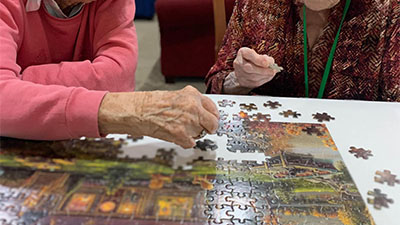
Creative arts bypass damaged language pathways and stimulate state of mind. I have actually seen nonverbal citizens hum and sway throughout live guitar sets, then stay calmer for hours later. Art should be procedure based, not graded, with bold paints, tactile materials, and no pressure to make something representational. Poetry circles, where a facilitator reads a few lines and invites a word or gesture in action, can work even late in the disease.
Intergenerational visits can be golden or chaotic, depending on preparation. The best ones are structured, board games with big pieces, easy crafts, shared reading, or music, and kept to thirty to forty minutes. The energy raises the space, and both sides benefit.
Outdoors is non flexible when weather condition allows. Sunshine assists regulate sleep wake cycles and cravings. A safe yard with a looping path, seating in sun and shade, and plants that welcome touch and odor gives staff alternatives besides another lap of the corridor. Sensory gardens with herbs like rosemary and mint succeed. Raised beds let people garden without deep bending.
Therapies that incorporate, not isolate
A memory care home is more powerful when treatment is a thread, not a separate room homeowners visit twice a week. Occupational treatment can assist with dressing techniques, adaptive tools for dining, and ecological tweaks that minimize confusion. Physical treatment targets strength, balance, and gait, particularly after a hospitalization or fall. Speech language pathologists do far more than speech, they aid with swallowing safety, interaction techniques, and cognitive workouts customized to the person's level.
Ask how typically homeowners get therapy when there is no intense trigger. Some neighborhoods count on routine screens to capture decrease before it causes a crisis. Others develop short, focused treatment blocks into the first month after relocation in, which can prevent problems and boost confidence.
Music therapy and art therapy, when provided by trained therapists, reach individuals conventional talk treatment can not. A certified music therapist does not just play songs. They can use rhythm to organize movement, tune to cue speech, and carefully chosen playlists to manage stimulation. Households frequently bring playlists built from favorite eras and artists, which becomes part of the daily toolkit.
You might likewise become aware of recognition treatment, which fulfills an individual in their viewed reality rather than forcing correction, and Montessori based dementia care, which breaks tasks into steps with clear visual hints and uses significant roles. Both are genuine methods when done attentively. They rely on personnel training and consistency more than expensive equipment.
Some homes advertise multisensory rooms with soft lighting, gentle noises, and tactile things. These spaces can help during agitation if the group uses them well. The secret is intentional usage, no one is relaxed by a space that becomes a catchall storage space or is too stimulating. Ask to see how and when it is utilized, and what outcomes they track.
Safety that does not feel like a lockdown
Residents require flexibility to walk, check out, and interact assisted living farmington nm without stepping into risk. Good style makes the safe choice the simple one. Hallways ought to loop back rather than dead end. Exits are protected per policies, typically with keypads or delayed egress, but need to not control the visual field. Memory boxes by doors help wayfinding. Washrooms are simple to identify without hunting.
Technology can include a layer, door sensing units that alert staff if somebody opens a gate, movement sensing units in spaces for overnight checks, and wearable devices that track location within the structure. The objective is to support personnel, not change them. I always ask which alerts go where, and how the team avoids alarm tiredness, because a consistent chorus of beeps assists no one.
Medication management is critical. In a well run memory care home, a nurse or trained med technician supervises ordering, storage, and administration with double checks to prevent missed out on or duplicative doses. Modifications in medication often precipitate behavioral shifts, so great groups keep track of for adverse effects when a prescription is included or adjusted.
Falls can not be removed, however danger can be minimized. The daily program represent typical threat times, after toileting, late afternoon, shifts. Shoes fit, floors are non glare, chairs are the ideal height, and mobility help are within reach and encouraged rather than hidden.
Dining, self-respect, and real nutrition
The dining-room tells you a lot. Do people look engaged and comfortable, or is the space loud and rushed? An excellent memory care home experiments, little plate sizes to decrease overwhelm, condiments on the table for control, and staff who hint with the very first bite instead of hovering. Menus must use choice without a complicated decision tree, two or 3 choices works. Texture customized diets prevail, however they should be tasty. Finely chopped proteins blended into sauces, soft-cooked vegetables, and finger foods like frittata slices, fish cakes, and melon cubes retain flavor and self-respect. Cold cereal at every meal is not a plan.
Weight is tracked, but numbers alone are not the objective. Energy and pleasure matter. Hydration carts with water, organic teas, and fruit infused alternatives make it basic to say yes more frequently. Residents with diabetes or heart disease need thoughtful alternatives, not dull plates that result in skipped meals. Household recipes can in some cases be adjusted, a small bowl of a precious soup moving weekly to the menu assists more than any supplement drink.
An environment that reduces friction
Cognitive load is the hidden tax of dementia. The environment can contribute to it or lighten it. Clear signs with words and images helps. So do memory hints, a red sweater draped over a chair near the dining room, a preferred picture by a bedroom door, a shadow box with tactile items from a previous job. Lighting is even and warm, without glossy floors that look wet. Background noise remains low. TVs do not shriek in typical spaces.
Smaller home models, eight to sixteen locals sharing a kitchen area and living area, often feel calmer than large systems. That said, some bigger communities have actually found out to create areas within a larger footprint. Outdoor area needs to be quickly available without unlocking a separate door that requires staff escort. A constant walking course with things to see and do gives movement a purpose.
Private rooms are valuable for dignity and sleep, but shared rooms can work when spending plans are tight, particularly if there is enough typical space to avoid living at the bedside. Search for clean bathrooms, grab bars in the ideal places, and shower rooms that are big enough for two assistants to move safely.
Staff training, supervision, and culture
Facilities market functions, but individuals make the place. Inquire about training in dementia care at hire and continuous. In many states, minimums are modest, 8 to twelve hours at start and a handful of hours annually. Strong service providers go further, layering skills like nonverbal communication, de escalation, safe transfers, feeding support, and disease particular education. Yearly refreshers in the variety of 12 to 24 hr, plus coaching on the flooring, keep abilities lively.
Turnover takes place in health care, however very high turnover interferes with relationships and regimens. You will not get an ideal number. What you can ask is the number of brand-new faces residents meet in a week, how frequently they use agency staff, and how the supervisor supports the team during hard shifts. A director who hangs around on the floor, not just behind a desk, normally runs a steadier ship.
Ratios matter, but ratios without training and management do not fix much. Expect how personnel discuss homeowners. Are they numbers on a board, or people with histories? Listen in a corridor, you will hear the culture in casual remarks.
Communication with households need to be routine and two method. Search for a strategy that consists of set up updates, quick calls after a fall or medication modification, and an open door for visits and care plan conferences. Innovation websites assist some families, however a relationship with a real individual is what matters when something goes wrong at 7 p.m. On a Friday.
What to ask and discover when you tour
Most families will visit 2 or three options before picking a memory care home. Bring a notebook and trust your eyes and ears. A couple of focused checks can expose more than pages of marketing material.
- Watch for engagement in typical areas at various times of day, mid morning, mid afternoon, and early evening, and notice whether staff initiate contact without being asked.
- Ask who will remain in the structure overnight, by function, not just the number, and what takes place if two citizens require hands on aid at the same time.
- Request examples of how they have supported citizens who roam, decline care, or have sleep turnaround, listening for useful actions instead of generalities.
- Review a sample menu and observe a meal if possible, noting parts, pacing, and whether personnel sit at eye level when assisting.
- Ask about transitions to higher levels of care, on website or by transfer, including how they coordinate if hospitalization is required and how they support return to routine.
If a home can not accommodate a short-notice visit, that is not a warning by itself, however it tells you something about staffing and rhythm. Drop by at a different time unannounced if you can. Smells must be neutral to pleasant. A continuous odor of urine recommends gaps in toileting routines or laundry flow.
Measuring quality beyond glossy ratings
Public ratings and assessment reports are a starting point. They tell you whether a center meets baseline rules, not whether it produces great days. Numerous strong neighborhoods track internal metrics they will share if asked, hospital transfer rates, weight stability, falls per resident month, resident and household complete satisfaction, and how typically psychedelic medications are used and examined. Expect varieties rather than single month snapshots, since these numbers move with case mix.
Ask how they use data to alter practice. For example, if falls spike between 4 and 6 p.m., what did they do about it, staffing adjustments, activity modifications, lighting tweaks? If weight loss approaches, did they include a treat cart, customize textures, or include a dietitian more intensely? A team that uses their own details to course correct is most likely to sustain quality.
Memory care within assisted living, or standalone homes
You will find memory care housed within larger assisted living neighborhoods and also standalone memory care homes. Each model has strengths. Within assisted living, you may see more amenities, more comprehensive treatment access, and much easier transitions if a partner resides in the general side. The possible downside is a less specific culture if management spreads attention across several service lines. Standalone memory care homes tend to be smaller and more concentrated, with personnel who do dementia care throughout the day, every day. They can likewise feel more intimate, which some households value.
Cost differs widely by area and level of requirement. Private pay daily rates for memory care often run 10 to 30 percent greater than basic assisted living due to staffing and security features. Expect a range that might be a couple of thousand dollars monthly in some markets to well above that in metropolitan centers. Clarify what is included. Some neighborhoods bundle care into tiers, others charge point by point for bathing assistance, incontinence care, or medication management. Ask about Medicaid approval if that belongs to your plan, since not all memory care homes agreement with state programs.
Edge cases and tailoring for different dementias
Not all dementia looks the very same. Alzheimer's illness, vascular dementia, Lewy body dementia, and frontotemporal dementia bring unique patterns. A resident with Lewy body dementia may have brilliant visual hallucinations and move unexpectedly due to Parkinsonian functions. The team needs to understand that antipsychotics can worsen signs for these people and that fluctuating attention is part of the disease. Lighting and contrast adjustments can reduce misinterpretation of shadows. Short, clear sentences assist throughout attention dips.
Someone with frontotemporal dementia may have strong physical abilities however impaired judgment and impulse control. Rigid group activities and scolding do not work. Structured roles that transport energy, establishing chairs, providing napkins, or folding laundry, and a calm environment with clear borders can decrease conflicts.
Vascular dementia frequently presents with uneven abilities depending upon which areas of the brain are affected. A one size technique fails here. An excellent care plan identifies islands of strength to develop on.
Your questions throughout a tour can reflect this subtlety. Ask the nurse or director to share a story, de identified, of how they adapted for a resident with a particular medical diagnosis, what worked, what did not, and what they learned.
When change is the ideal answer
Even the very best memory care home can not hold every resident permanently. Development, medical complexity, or habits that position risk may require a transfer to a higher level of care or a specialized setting. What differentiates great programs is how they deal with the discussion. They include the family early, not at a crisis point. They collaborate with doctors, use choices, and work to keep the resident comfy through the transition. They will also inform you when they believe they can continue securely with additional supports, such as heightened observation or short-lived one to one staffing throughout a rough patch.
Families in some cases stress they have actually failed if a move is required. You have actually not failed. Illness progress, requires change, and responsible teams respond to reality.
Putting it together
An excellent memory care home seems like a place where people live, not simply a location where care is delivered. The calendar has texture. The personnel exist and unhurried. Meals invite appetite. Treatments fold into life rather of differing. Precaution are invisible until needed. Families are partners, not visitors at the fringe.
If you concentrate on regimens, relationships, and how a day unfolds, you will see the distinction. Trust your observations, request examples, and spend enough time on the floor to watch the regular work of care. It is in those ordinary minutes that dignity is either secured or lost. The right memory care home constructs a thousand small wins into the day. For an individual coping with dementia, and for the family who loves them, those wins add up.
BeeHive Homes of Farmington provides assisted living care
BeeHive Homes of Farmington provides memory care services
BeeHive Homes of Farmington provides respite care services
BeeHive Homes of Farmington supports assistance with bathing and grooming
BeeHive Homes of Farmington offers private bedrooms with private bathrooms
BeeHive Homes of Farmington provides medication monitoring and documentation
BeeHive Homes of Farmington serves dietitian-approved meals
BeeHive Homes of Farmington provides housekeeping services
BeeHive Homes of Farmington provides laundry services
BeeHive Homes of Farmington offers community dining and social engagement activities
BeeHive Homes of Farmington features life enrichment activities
BeeHive Homes of Farmington supports personal care assistance during meals and daily routines
BeeHive Homes of Farmington promotes frequent physical and mental exercise opportunities
BeeHive Homes of Farmington provides a home-like residential environment
BeeHive Homes of Farmington creates customized care plans as residents’ needs change
BeeHive Homes of Farmington assesses individual resident care needs
BeeHive Homes of Farmington accepts private pay and long-term care insurance
BeeHive Homes of Farmington assists qualified veterans with Aid and Attendance benefits
BeeHive Homes of Farmington encourages meaningful resident-to-staff relationships
BeeHive Homes of Farmington delivers compassionate, attentive senior care focused on dignity and comfort
BeeHive Homes of Farmington has a phone number of (505) 591-7900
BeeHive Homes of Farmington has an address of 400 N Locke Ave, Farmington, NM 87401
BeeHive Homes of Farmington has a website https://beehivehomes.com/locations/farmington/
BeeHive Homes of Farmington has Google Maps listing https://maps.app.goo.gl/pYJKDtNznRqDSEHc7
BeeHive Homes of Farmington has Facebook page https://www.facebook.com/BeeHiveHomesFarmington
BeeHive Homes of Farmington has an YouTube page https://www.youtube.com/@WelcomeHomeBeeHiveHomes
BeeHive Homes of Farmington won Top Assisted Living Home 2025
BeeHive Homes of Farmington earned Best Customer Service Award 2024
BeeHive Homes of Farmington placed 1st for Senior Living Communities 2025
People Also Ask about BeeHive Homes of Farmington
What is BeeHive Homes of Farmington Living monthly room rate?
The rate depends on the level of care that is needed (see Pricing Guide above). We do a pre-admission evaluation for each resident to determine the level of care needed. The monthly rate is based on this evaluation. There are no hidden costs or fees
Can residents stay in BeeHive Homes until the end of their life?
Usually yes. There are exceptions, such as when there are safety issues with the resident, or they need 24 hour skilled nursing services
Do we have a nurse on staff?
Yes. Our administrator at the Farmington BeeHive is a registered nurse and on-premise 40 hours/week. In addition, we have an on-call nurse for any after-hours needs
What are BeeHive Homes’ visiting hours?
Visiting hours are adjusted to accommodate the families and the resident’s needs… just not too early or too late
Do we have couple’s rooms available?
Yes, each home has rooms designed to accommodate couples. Please ask about the availability of these rooms
Where is BeeHive Homes of Farmington located?
BeeHive Homes of Farmington is conveniently located at 400 N Locke Ave, Farmington, NM 87401. You can easily find directions on Google Maps or call at (505) 591-7900 Monday through Sunday 9:00am to 5:00pm
How can I contact BeeHive Homes of Farmington?
You can contact BeeHive Homes of Farmington by phone at: (505) 591-7900, visit their website at https://beehivehomes.com/locations/farmington/,or connect on social media via Facebook or YouTube
You might take a short drive to the Farmington Museum. The Farmington Museum offers local history and cultural exhibits that create an engaging yet comfortable outing for assisted living, memory care, senior care, elderly care, and respite care residents.